•  

US: Tropical Storm Edouard Makes Landfall Near Louisiana-Texas Border 3

Tropical Storm Edouard made landfall near Johnson Bayou along the Louisiana coast on Tuesday, September 1, with maximum sustained winds of 60 mph. The storm brought hurricane-strength wind gusts to the Port Arthur area near the Texas-Louisiana border as it came ashore.

  •  

US: Tropical Storm Edouard Makes Landfall Near Louisiana-Texas Border 2

Tropical Storm Edouard made landfall near Johnson Bayou along the Louisiana coast on Tuesday, September 1, with maximum sustained winds of 60 mph. The storm brought hurricane-strength wind gusts to the Port Arthur area near the Texas-Louisiana border as it came ashore.

  •  

US: Tropical Storm Edouard Makes Landfall Near Louisiana-Texas Border

Tropical Storm Edouard made landfall near Johnson Bayou along the Louisiana coast on Tuesday, September 1, with maximum sustained winds of 60 mph. The storm brought hurricane-strength wind gusts to the Port Arthur area near the Texas-Louisiana border as it came ashore.

  •  

US: Jan. 6 Demonstrators March Through D.C. to Mark 5 Years Since Capitol Attack

Dozens of pardoned rioters gathered in Washington D.C. on Tuesday, January 6, to mark the fifth anniversary of the Capitol attack in 2021, praising President Trump for their release while demanding further financial restitution. The group marched from the White House to the Capitol with signs calling the event a setup and demanding the arrest of Nancy Pelosi.

  •  

US: 2 Injured, Electrical Fire in Washington D.C. Capitol Subway Tunnel 2

A small electrical fire broke out in the subway between the Rayburn House Office Building and the U.S. Capitol on Thursday, November 20, prompting road closures. The fire was quickly extinguished, and two Capitol Police officers were hospitalized for treatment.

  •  

US: 2 Injured, Electrical Fire in Washington D.C. Capitol Subway Tunnel

A small electrical fire broke out in the subway between the Rayburn House Office Building and the U.S. Capitol on Thursday, November 20, prompting road closures. The fire was quickly extinguished, and two Capitol Police officers were hospitalized for treatment.

  •  
The Dogger Bank Incident or Russian Outrage

The Dogger Bank Incident or Russian Outrage

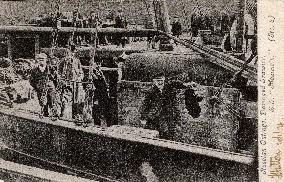
The Dogger Bank Incident (or 'Russian Outrage') occured on the 22nd October 1904, when the Russian Fleet (sailing to reinforce the 1st Pacific Squadron stationed at Port Arthur during the Russo-Japanese War) mistook 48 harmless British trawlers at Dogger Bank for an Imperial Japanese Navy force, leading to the loss of life of three British seamen, two by drowning and one from shock a year later. This card shows the damaged trawler 'Moulmein' and its crew, lucky to have returned to port alive. Date: 1904

  •  
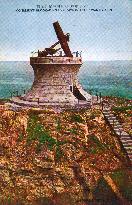
Memorial at Port Arthur, Manchuria, China

Memorial at Port Arthur, Manchuria, China

Port Arthur, Manchuria, China -- memorial of naval guns and mines from the Russo-Japanese War (1904-1905). Date: circa 1908

  •  
Patriotic Shrine - Paiyushan - Port Arthur

Patriotic Shrine - Paiyushan - Port Arthur

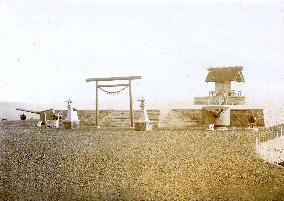
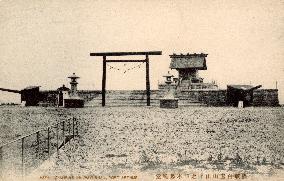
Patriotic Shrine - Paiyushan - Lushunkou (a district in the municipality of Dalian, Liaoning province, also called Lushun City or Lushun Port, formerly known as both Port Arthur and Ryojun). During the Russo-Japanese war (1904-1905), the Russians surrendered Port Arthur to the Japanese after nearly a year's siege: the Japanese expended 58,000 killed or wounded to obtain the town. This is a Japanese memorial to the victory. Date: circa 1910

  •  
South Manchurian Railway Company Hospital - Shenyang, China

South Manchurian Railway Company Hospital - Shenyang, China

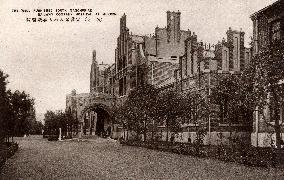
South Manchurian Railway Company Hospital - Shenyang (formerly Mukden), China. With the region under Japanese control following victory in the Russo-Japanese War (1904-5), Japanese settlers were encouraged through the construction of schools, libraries, hospitals and public utilities. The South Manchuria Railway Company (Mantetsu) - was a company founded in the Empire of Japan in 1906, taken over after the Russo-Japanese War, and operated within China in the Japanese-controlled South Manchuria Railway Zone. The railway itself ran from Lushun Port (Port Arthur) at the southern tip of the Liaodong Peninsula to Harbin, where it connected to the Chinese Eastern Railway. Date: circa 1920s

  •  
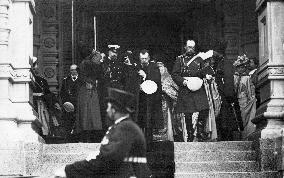
Tsar Nicholas II and others in Reval (Tallinn), Estonia

Tsar Nicholas II and others in Reval (Tallinn), Estonia

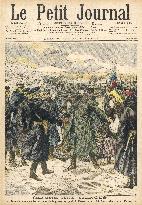
Tsar Nicholas II and others leaving the Alexander Nevsky Cathedral in Reval (Tallinn), now in Estonia, on 27 September/10 October 1904. Others present are Prince Alexei Alexandrovich, Admiral General of the Russian navy (left, in white cap), and Count Frederiks. At this time Russia was at war with Japan, following an attack by Japan on the Russian naval base at Port Arthur. 1904

  •  
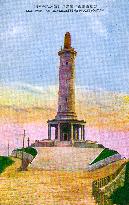
Lushun Baiyu Tower - Lushunkou, China (Ryojun)

Lushun Baiyu Tower - Lushunkou, China (Ryojun)

Lushun Baiyu Tower - built after the Russo-Japanese War by the Japanese to commemorate their 20, 000 war casualties at Ryojun (present-day Lushunkou, People's Republic of China formerly Port Arthur) - the major navy base for the Imperial Japanese Navy in the Kwantung Leased Territory before and during Second Sino-Japanese War (1937-1945). Date: circa 1930s

  •  
Treaty - Battle of Lushun - Anatoly Stessel, Nogi Maresuke

Treaty - Battle of Lushun - Anatoly Stessel, Nogi Maresuke

The Shuishiying in Lushunkou District, Dalian, Liaoning Province, China, where the cease fire treaty of the Battle of Lushun was signed between Anatoly Stessel (1848-1915) and Count Nogi Maresuke (1849-1912), representing Russia and Japan respectively, on 5th January 1905, during the Russo-Japanese War depicted in this postcard. Shuishiying were camp sites (or office buildings) of the Naval forces during the later days of the Qing Dynasty in China. Date: 1905

  •  
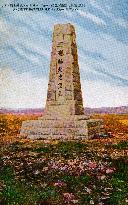
Monument to the Blockade Expedition - Lushunkou, China

Monument to the Blockade Expedition - Lushunkou, China

Monument to the Blockade Expedition built by the Japanese at Ryojun (present-day Lushunkou, People's Republic of China formerly Port Arthur) - the major navy base for the Imperial Japanese Navy in the Kwantung Leased Territory before and during Second Sino-Japanese War (1937-1945). Date: circa 1930s

  •  
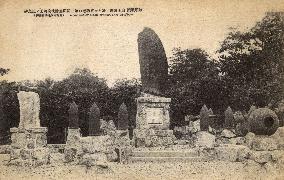
Martyrs Monument, Hakugyokuzan Ryojun, Port Arthur, Memorial

Martyrs Monument, Hakugyokuzan Ryojun, Port Arthur, Memorial

Martyrs Monument, Hakugyokuzan Ryojun, Port Arthur, Memorial. ort Arthur is now under Chinese control and is known as Lushunkou (a district in the municipality of Dalian, Liaoning province, also called Lushun City or Lushun Port, formerly known as Ryojun). Lushunkou has an excellent natural harbour, the possession and control of which became a 'casus belli' (justification for the act of war) during the Russo-Japanese War (19041905). Japanese and then Soviet administration would continue until 1953. Date: 1909

  •  
Ancient Battlefield Memorial at Lushunkou, China (Ryojun)

Ancient Battlefield Memorial at Lushunkou, China (Ryojun)

Ancient Battlefield Memorial at Ryojun (present-day Lushunkou, People's Republic of China formerly Port Arthur) - the major navy base for the Imperial Japanese Navy in the Kwantung Leased Territory before and during Second Sino-Japanese War (1937-1945). Date: circa 1930s

  •  
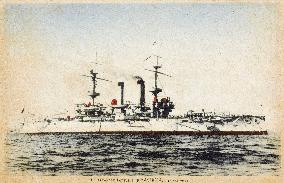
Japanese pre-dreadnought battleship Yashima built in the UK

Japanese pre-dreadnought battleship Yashima built in the UK

Yashima - a Fuji-class pre-dreadnought battleship built for the Imperial Japanese Navy (IJN) in the 1890s. Designed and built in the United Kingdom, she participated in the early stages of the Russo-Japanese War of 19041905, including the Battle of Port Arthur. Date: circa 1904

  •  
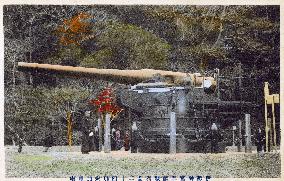
Japan - Mounted 28cm Howitzer

Japan - Mounted 28cm Howitzer

Japan - Mounted 28cm Howitzer dedicated to Ise Jingu Date: circa 1910

  •  
Japanese pre-dreadnought battleship Mikasa - built in the UK

Japanese pre-dreadnought battleship Mikasa - built in the UK

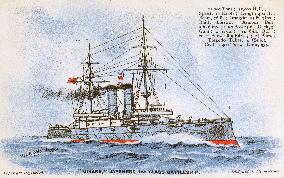
The Mikasa - a pre-dreadnought battleship built for the Imperial Japanese Navy (IJN) in the late 1890s, and was the only ship of her class. The ship served as the flagship of Admiral Togo Heihachiro throughout the Russo-Japanese War of 19041905, including the Battle of Port Arthur Built at Vickers shipyard, Barrow-in-Furness Date: 1904

  •  
Japan - Mounted 24cm Howitzer

Japan - Mounted 24cm Howitzer

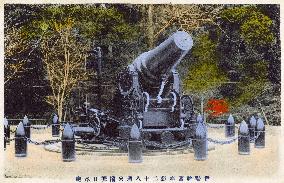
Japan - Mounted 24cm Howitzer Date: circa 1910

  •  
Russo-Japanese War - The Capture of Port Arthur - Jan 1905

Russo-Japanese War - The Capture of Port Arthur - Jan 1905

Russo-Japanese War - The Japanese Capture of Port Arthur - January 1905. Date: 1905

  •  
Russo-Japanese War - Captured Wagons, Office and Train

Russo-Japanese War - Captured Wagons, Office and Train

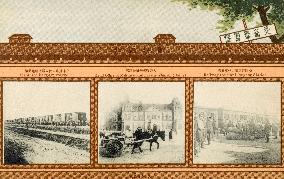
Russo-Japanese War - Captured Russian baggage wagons, The Head Office of the Military Railways at Dairen (now Dalian, formerly Dalny) and a Railway Train at Liaoyang Station in the Liaoning province of China. Russian Admiral Eugene Alexeyeff was blamed for splitting precious resources shipped 5,000 miles across the single tracked Trans-Siberian Railway and Manchurian Railway between Dalny and Port Arthur (pictured here). The inset photographs are creatively framed as the windows of a railway carriage! Date: circa 1910s

  •  
Russo-Japanese War - Japanese Army blow up Sungshushan Fort

Russo-Japanese War - Japanese Army blow up Sungshushan Fort

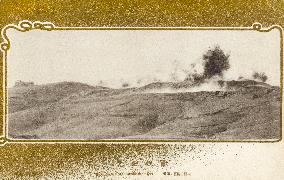
Russo-Japanese War - Japanese Army blowing up the Sung-shu-shan fort (Pine Tree Hill) - Port Arthur. Date: 1904

  •  
Russo-Japanese War - Japanese Army Wintering near Shaho

Russo-Japanese War - Japanese Army Wintering near Shaho

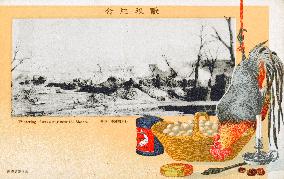
Russo-Japanese War - Japanese Army Wintering near the Shaho River along the MukdenPort Arthur spur of the China Far East Railway north of Liaoyang, Manchuria. Surrounded by illustrations of some of the supplies required by the troops! Date: 1904

  •  
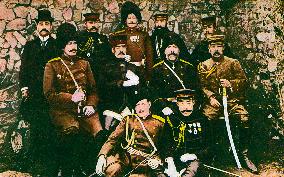
Russo-Japanese War - 3rd Army Division at Battle of Shaho

Russo-Japanese War - 3rd Army Division at Battle of Shaho

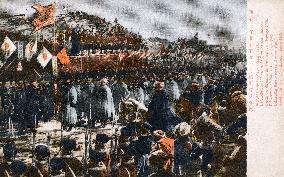
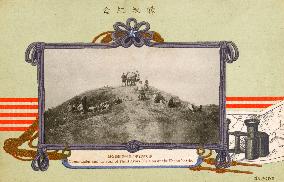
Japanese Commander and his staff of the Third Army at the Battle of Shaho (Saka no kaisen) - the second large-scale land battle of the Russo-Japanese War fought along a 37-mile front centred at the Shaho River along the Mukden Port Arthur spur of the China Far East Railway north of Liaoyang, Manchuria. Date: 1904

  •  
Naval reception at Port Arthur (Lushunkou), China

Naval reception at Port Arthur (Lushunkou), China

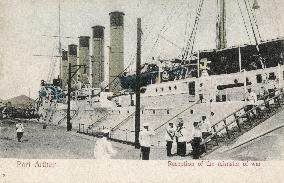
Reception of the (Russian) Minister of War at the seaport of Port Arthur, Lushunkou (a district in the municipality of Dalian, Liaoning province). Also known as Lushun City or Lushun Port, formerly known as both Port Arthur and Ryojun. At one time under Russian administration, then Japanese, but now in China. Date: early 20th century

  •  
Russian Gufire During the Battle of Port Arthur

Russian Gufire During the Battle of Port Arthur

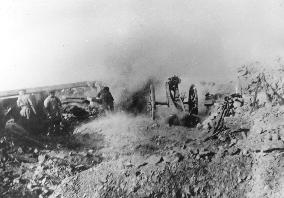
Russian artilery in action during the Battle of Port Arthur which spanned from the 8th to the 9th of February in 1904. The Battle of Port Arther was the very first conflict within the Russo-Japanese War. Date: February 1904

  •  
Chinese Boatmen at Port Arthur

Chinese Boatmen at Port Arthur

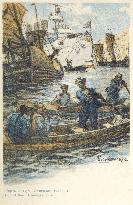
Chinese boatmen in the Port at Lushunkou, a district in the municipality of Dalian, Liaoning province, also called Lushun City or Lushun Port, formerly known as both Port Arthur and Ryojun. During the Russo-Japanese war, the Russians surrendered Port Arthur to the Japanese after nearly a year's siege: the Japanese expended 58,000 killed or wounded to obtain the town. As can be seen here, Lushunkou boasts an excellent natural harbour, the possession and control of which became a 'casus belli' (justification for the act of war) during the Russo-Japanese War (19041905). Date: 1904

  •  
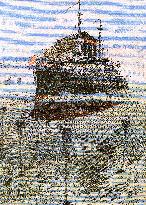
The dreadnought battle-ship

The dreadnought battle-ship

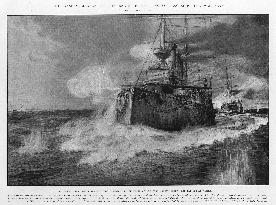
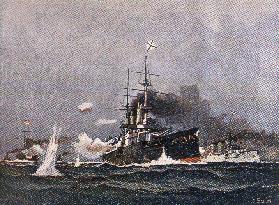
The vessel from which Admiral Togo directed the crippling of Port Arthur during the Russo-Japanese War. Date: 1905

  •  
Russian battleship, the Petropavlovsk

Russian battleship, the Petropavlovsk

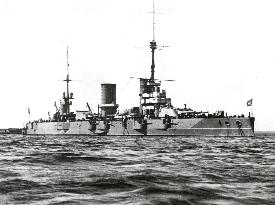
The Russian battleship, the Petropavlovsk, launched in 1894, sunk by a mine off Port Arthur, Manchuria, in 1904 during the Russo-Japanese War. Date: early 20th century

  •  
Port Arthur - Varieties of Chinese Vegetables

Port Arthur - Varieties of Chinese Vegetables

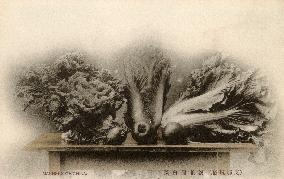
Japanese card depicting three varieties of Chinese cabbage and other vegetables (possibly beetroot) - at Port Arthur. A panoramic view of Lushunkou (a district in the municipality of Dalian, Liaoning province, also called Lushun City or Lushun Port, formerly known as both Port Arthur and Ryojun). During the Russo-Japanese war, the Russians surrendered Port Arthur to the Japanese after nearly a year's siege. Date: 1907

  •  
The Dogger Bank Incident or Russian Outrage

The Dogger Bank Incident or Russian Outrage

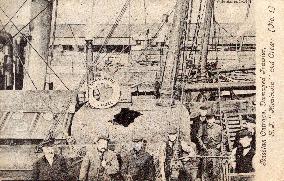
The Dogger Bank Incident (or 'Russian Outrage') occured on the 22nd October 1904, when the Russian Fleet (sailing to reinforce the 1st Pacific Squadron stationed at Port Arthur during the Russo-Japanese War) mistook 48 harmless British trawlers at Dogger Bank for an Imperial Japanese Navy force, leading to the loss of life of three British seamen, two by drowning and one from shock a year later. This card shows the damaged trawler 'Mino' and its crew, lucky to have returned to port alive. Date: 1904

  •  
The Dogger Bank Incident or Russian Outrage

The Dogger Bank Incident or Russian Outrage

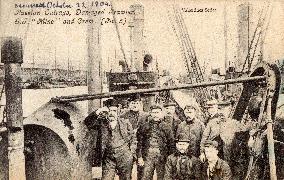
The Dogger Bank Incident (or 'Russian Outrage') occured on the 22nd October 1904, when the Russian Fleet (sailing to reinforce the 1st Pacific Squadron stationed at Port Arthur during the Russo-Japanese War) mistook 48 harmless British trawlers at Dogger Bank for an Imperial Japanese Navy force, leading to the loss of life of three British seamen, two by drowning and one from shock a year later. This card shows the damaged trawler 'Moulmein' and its crew, lucky to have returned to port alive. Date: 1904

  •  
Port Arthur (Dalian) - Japanese bombardment

Port Arthur (Dalian) - Japanese bombardment

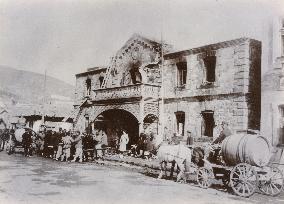
Port Arthur (Dalian) - a Russian administrative building damaged during the Japanese bombardment in February 1904. Dalian, Liaoning province, also called Lushun City or Lushun Port was formerly known as both Port Arthur and Ryojun. During the Russo-Japanese war, the Russians surrendered Port Arthur to the Japanese after nearly a years siege: the Japanese expended 58,000 killed or wounded to obtain the town. Date: 1904

  •  
Vice-Admiral Eugene Ivanovitch Alexeiev

Vice-Admiral Eugene Ivanovitch Alexeiev

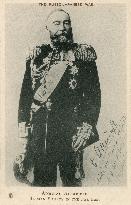
Vice-Admiral Eugene Ivanovitch Alexeiev, Viceroy of the Russian Dominions in the Far East, around the time of the Russo-Japanese War (1904-5). A key participant in Russia disaster at Port Arthur in 1905. Date: circa 1905

  •  
Port Arthur - Red Cross Tent.

Port Arthur - Red Cross Tent.

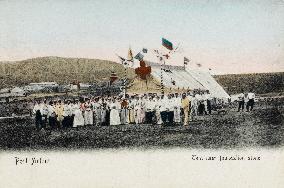
Red Cross tent at Port Arthur, near to the foundation stone for a new Red Cross Hospital to be built on the site. Port Arthur (modern Lushunkou) is a district in the municipality of Dalian, Liaoning province, also called Lushun City or Lushun Port, formerly known as Ryojun. During the Russo-Japanese war, the Russians surrendered Port Arthur to the Japanese after nearly a year's siege: the Japanese expended 58,000 killed or wounded to obtain the town. Date: circa 1904

  •  
Port Arthur - Lushunkou - China

Port Arthur - Lushunkou - China

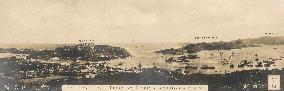
A panoramic view of Lushunkou (a district in the municipality of Dalian, Liaoning province, also called Lushun City or Lushun Port, formerly known as both Port Arthur and Ryojun). During the Russo-Japanese war, the Russians surrendered Port Arthur to the Japanese after nearly a year's siege: the Japanese expended 58,000 killed or wounded to obtain the town. As can be seen here, Lushunkou boasts an excellent natural harbour, the possession and control of which became a 'casus belli' (justification for the act of war) during the Russo-Japanese War (19041905). Date: circa 1909

  •  
Celebration of the fall of Port Arthur

Celebration of the fall of Port Arthur

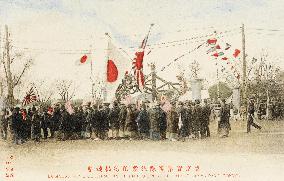
Japanese businessmen celebrate the Fall of Port Arthur during the Russo-Japanese War at Hibya Park, Tokyo. The Russians surrendered Port Arthur to the Japanese after nearly a year's siege: the Japanese expended 58,000 killed or wounded to obtain the town. Date: January 1905

  •  
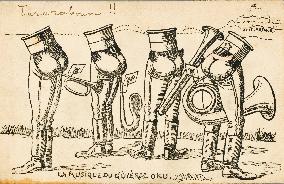
The Music of General Oku

The Music of General Oku

French 'comment' on General Yasukata Oku's plans to capture Lushunkou (a district in the municipality of Dalian, Liaoning province, also called Lushun City or Lushun Port, formerly known as both Port Arthur and Ryojun). Lushunkou has an excellent natural harbour, the possession and control of which became a 'casus belli' (justification for the act of war) during the Russo-Japanese War (19041905). Date: circa 1904

  •  
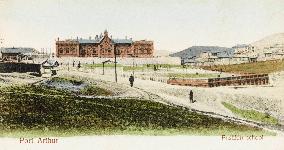
Port Arthur - The Pushkin School

Port Arthur - The Pushkin School

Port Arthur - The Pushkin School during the period of Russian occupation of the city. Port Arthur is now under Chinese control and is known as Lushunkou (a district in the municipality of Dalian, Liaoning province, also called Lushun City or Lushun Port, formerly known as Ryojun). Lushunkou has an excellent natural harbour, the possession and control of which became a 'casus belli' (justification for the act of war) during the Russo-Japanese War (19041905). Japanese and then Soviet administration would continue until 1953. Date: circa 1910s

  •  
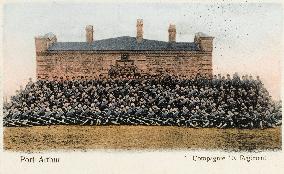
Russian troops at Port Arthur

Russian troops at Port Arthur

Port Arthur - held by Russia prior to defeat in the Russo-Japanese war. In this photograph, the 1st Company of the 10th Regiment pose for an official photograph. Many would likely have been involved in the bloody conflict soon to engulf this location of special strategic importance. Date: circa 1904

  •  
RUSSIAN SHIPS INCANAL

RUSSIAN SHIPS INCANAL

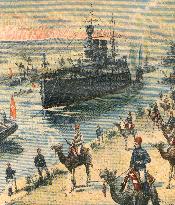
Warships of the Russian Baltic Fleet pass through the Canal on their way to Port Arthur, to take part in the war with Japan : soon, many of these ships will be under water. Date: December 1904

  •  
MINES AT PORT ARTHUR

MINES AT PORT ARTHUR

A Japanese battleship sails dangerously close to Russian mines placed there in defence of Port Arthur during the Russo-Japan war Date: 1904

  •  
RUS/JAP WAR/ PT ARTHUR

RUS/JAP WAR/ PT ARTHUR

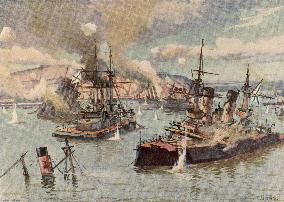
The Russian fleet is destroyed in the harbour of Port Arthur Date: January 1905

  •  
RUS/JAP WAR: SPY CAUGHT

RUS/JAP WAR: SPY CAUGHT

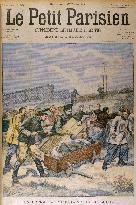
SPIES : at Port Arthur, Russians find a Japanese spy attempting to sneak into the town in a coffin, which saves them the expense of finding one for him Date: October 1904

  •  
RUS-JAP WAR/ BALLOON

RUS-JAP WAR/ BALLOON

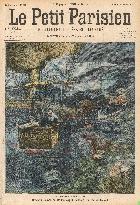
A Russian reconnaissance balloon keeps a watchful eye on the Japanese besiegers of Port Arthur Date: November 1904

  •  
RUS-JAP WAR/ PT ARTHUR

RUS-JAP WAR/ PT ARTHUR

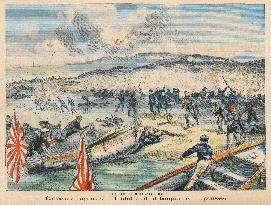
Port Arthur is threatened by a landing by the Japanese, but they are repulsed by the Russians and the siege will continue for many more months before the eventual surrender Date: February 1904

  •  
RUS/JAP WAR/ CRUISERS

RUS/JAP WAR/ CRUISERS

After the surrender of Port Arthur, the Russian cruisers 'Oley' and 'Aurora' flee to Manila Date: January 1905

  •  
RUS/JAP WAR/SURRENDER

RUS/JAP WAR/SURRENDER

The Russians surrender PORT ARTHUR to the Japanese after nearly a year's siege : the Japanese expended 58 000 killed or wounded to obtain the town Date: 2 January 1905

  •  
RUS-JAP WAR/PORT ARTHUR

RUS-JAP WAR/PORT ARTHUR

Japanese infantry attack the Russian trenches protecting Port Arthur Date: 1904

  • Main
  • Top
  • Editorial
  • Creative
  • About Us
  • About ILG
  • Terms of use
  • Company
  • BEHIND
  • Price List
  • Single Plan
  • Monthly Plan
  • Services
  • Shooting
  • Rights Clearance
  • Support
  • FAQ
  • How To Buy
  • Contact Us
  • Become a Partner

© KYODO NEWS IMAGES INC

All Rights Reserved.

  • Editorial
  • Olympics
  • News
  • Sports
  • Japan
  • Tech
  • Royal
  • Disaster
  • NorthKorea
  • Old Japan
  • SNS
  • Creative
  • Food
  • Japan
  • Landscape
  • Animal
  • Popular
  • #Ukraine
  • #China
  • #coronavirus
  • #N. Korea
  • #Russia
  • #Thailand
  • #Ukraine
  • #China
  • #coronavirus
  • #N. Korea
  • #Russia
  • #Thailand
  • Food
  • Japan
  • Landscape
  • Animal
  • Olympics
  • News
  • Sports
  • Japan
  • Tech
  • Royal
  • Disaster
  • NorthKorea
  • Old Japan
  • SNS